
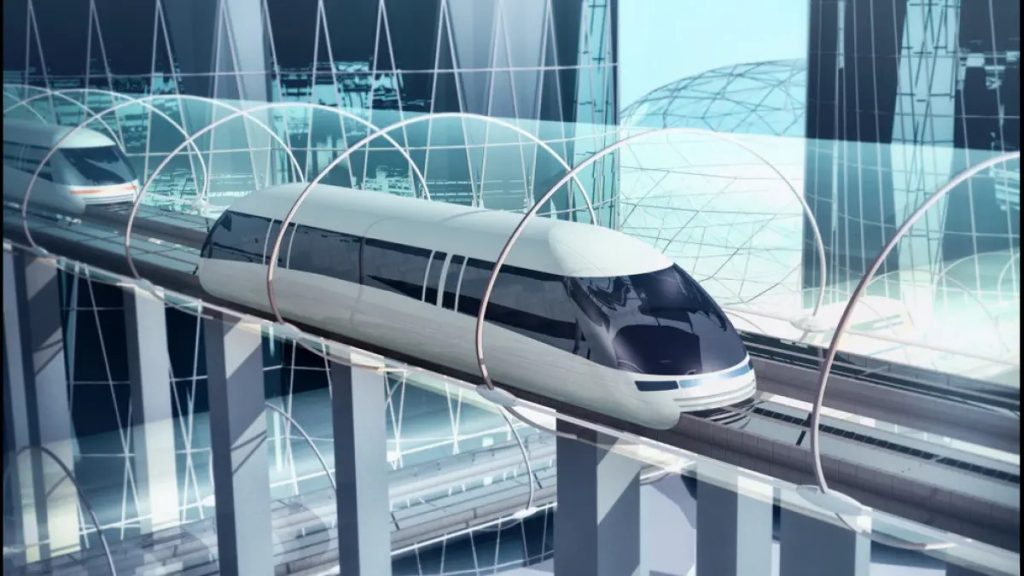
In the global hyperloop technology market, the report provides a clear view of how the industry is shaping up, covering future growth potential, investment directions, and overall market landscape. It explains the expected rise in market value, key drivers pushing adoption, and emerging technological progress. The study offers helpful insights for businesses, investors, and policymakers looking to understand long-term opportunities through 2034.
Market Size and Forecast
The hyperloop technology market reached USD 4.60 Billion in 2025 and is expected to grow to USD 108.10 Billion by 2034, supported by a CAGR of 42.03%. The growth is driven by rising demand for fast, efficient, and sustainable travel. Increasing investments in testing, design innovation, and feasibility studies further push the market forward.
The report provides insights into future opportunities, industry developments, and long-term adoption trends. It also explains how technological progress and collaborative projects shape market direction without focusing on any specific segments.
Market Snapshot
Growing innovation efforts and rising interest from governments and private companies are shaping the evolution of the hyperloop ecosystem. The technology continues to gain attention as a future-ready transportation solution.
Key Drivers
- Growing need for faster intercity and cross-country travel
- Increasing investments in transportation innovation
- Rising interest in sustainable and low-emission mobility solutions
- Continued development of advanced magnetic and propulsion technologies
- Expanding research initiatives and public-private partnerships
Market Segmentation Overview
The market is divided based on how the systems are structured and how they are used for transportation. These categories help explain the technology’s functionality and the different applications it can support.
By Transportation System
This segment covers the technology required to operate hyperloop networks, focusing on the major components that ensure speed, safety, and performance.
- Capsule: The high-speed pod for passengers or cargo designed to ensure comfort and safety while reducing friction.
- Tube: A low-pressure environment that enables high-speed travel with minimal resistance.
- Propulsion System: Advanced systems that power the capsule to maintain the desired speed.
- Route: Planned corridors that determine travel distance, demand coverage, and infrastructure layout.
By Carriage
This segment focuses on how hyperloop technology supports different transportation needs.
- Passenger: High-speed travel options that significantly reduce long-distance commute times.
- Cargo/Freight: Efficient logistics movement optimized for speed and timely deliveries.
Key Players
Competition in the market remains strong, with companies focusing on engineering, testing, and commercial planning.
- Virgin Hyperloop: Engaged in large-scale system testing and commercial project planning.
- Hyperloop Transportation Technologies: Known for developing innovative engineering frameworks.
- The Boring Company: Works on tunneling systems supporting high-speed mobility solutions.
- Hardt B.V.: Active in creating European hyperloop standards and research projects.
- Hyper Chariot: Focuses on consumer-oriented high-speed transport solutions.
These companies are collectively working on advancing design capabilities, partnerships, and future deployment planning.
Regional Dynamics
Overall, the market outlook varies across regions based on infrastructure capability, investment focus, and technology readiness.
North America: Strong private funding and pilot studies drive early-stage development, with efforts focused on high-speed connectivity.
Europe: Strong collaboration and policy support encourage regional studies and technology standardization.
Asia-Pacific: Rising urbanization and transport demand promote the evaluation of hyperloop routes and long-term planning.
Latin America: Growing interest in modern mobility solutions opens discussions on feasibility and potential routes.
Middle East & Africa: Investments in futuristic infrastructure contribute to long-term transport modernization plans.
Market Opportunities and Challenges
Opportunities
- Growing focus on sustainable high-speed transport
- Rising government support for next-generation mobility
- Increasing private investments in R&D
- Development of long-term infrastructure partnerships
- Strong potential in freight and logistics applications
Challenges
- High initial infrastructure costs
- Technical and engineering complexities
- Regulatory and safety approval requirements
- Uncertain timelines for large-scale deployment
- Need for extensive testing and feasibility evaluation
Future Outlook
The hyperloop technology market is expected to evolve through steady innovation, pilot testing, and engineering advancement. Growing collaboration between governments, investors, and technology firms will shape future development. The market will likely benefit from improved propulsion systems, lightweight materials, and optimized route planning. As competition increases, companies may focus on scaling prototypes and establishing commercial-ready models. These advancements will support long-term adoption and create new opportunities across global transportation networks.
Information Source: https://www.valuemarketresearch.com/report/hyperloop-technology-market
No responses yet